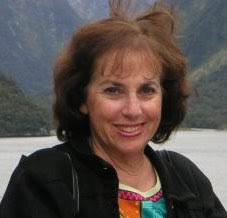
Thanksgiving: my worst holiday. The last time I saw my daughter in a family setting back in 1993. But my mouth curls into a smile now, so many years later, as I remember her vibrant sense of humor and how we laughed and laughed at some funny comments and situations during those four days. A few examples…
She had come to town with her new husband to help us celebrate the holidays. They had just returned from their honeymoon in Greece and drove from California to Arizona to be with us. When she saw we only had a trundle bed set-up for them, she made a face and made sure the beds were pushed together. “Mother!” she admonished me. “We’re married now and want to sleep very close together.” I thought she was kidding. She was serious! I vowed to buy a larger bed for the next time.
The whole family came to Thanksgiving dinner, what little family we had: my mom and dad, now gone; my step-brother, his wife and two children; and a few friends. One of the friends who stopped by was my daughter’s good friend’s mother. She loved Marcy very much and appreciated her thoughtfulness. She relayed the story about an earthquake in Los Angeles, very close to where Marcy and her friend lived. After calling me that morning at 6:30 a.m. to tell me she was okay, I puzzled at why she had to tell me that. “What are you calling me so early for?” I asked. She told me there had been an earthquake and she didn’t want me to worry. She was safe under the dining room table! She then quickly told me she had to call her friend’s mom so she wouldn’t worry. The friend was on the East coast, not even in Los Angeles at the time of the earthquake. Her mom appreciated my daughter’s thoughtfulness that morning.
My daughter informed me that the day after Thanksgiving, she was going to have some college friends over that she hadn’t seen in years. I told her that was a good idea. “Mom,” she said, “how would you like to make your famous, delicious orange chicken?” Of course I knew she was trying to get me to cook for everyone. And like a good mother, I did. I loved seeing her old friends, that I also knew, get together, tell old college stories about classes, hated dorm roommates and fun times they had, laughing all the while. Their humor was infectious, and my side hurt for days from laughing so much.
When it was time for my daughter and her husband to leave, my husband and I watched her get into the car and start to back out of the driveway. She must have sensed something amiss because she got out of the car, went to the back of the car and ripped off some stickers of rival universities that my husband had put on her car bumper, before smiling, waving and driving off. It was a standard joke between the two of them and her intuition had been right. It was my daughter who had the last laugh as I looked at my husband’s unhappy face that he had not fooled her!
Light a candle this Thursday, Thanksgiving, for those children no longer with us. Recall how blessed we were to have them and how they brought such joy to our lives, each and every day.
Sunday, November 18, 2012


Sunday, November 11, 2012
Carrie Bears
To help someone who is grieving feel close to someone they have lost in an artistic way, Carrie Pike creates what she labels Carrie Bears. I met Carrie years ago at a Compassionate Friends national conference where she displayed her bears. I thought they were cute, clever and could mean something special to those who have lost a loved one, particularly a child.
Carrie started creating these bears in 1999 for bereaved parents, so parents can feel close to the child they lost. "Every family has a story and as hard as it is, I feel that many have found comfort in having Carrie Bears to hold onto," she said.
How it works is this: the bereaved parent sends a favorite article of clothing to Carrie and she turns it into a soft, huggable 20 inch stuffed bear.
Carrie has done bears out of shirts, blouses, prom dresses, uniforms, skirts, baby blankets, infant outfits, levis, vests, pants, pajamas and flannel sheets. She warns that knits tend to stretch but can make for a very soft bear. Silky and thin materials can be used but don’t work quite as well. Cotton and denim fabrics hold the shape of the bear really well.
Bears can also be made to match a baby nursery or a bedroom set. If a loved one is confined to a hospital bed or has moved far away, cuddling a bear can make home feel so much closer. Every bear is different and every bear can be personalized with pictures or writing, according to Carrie.
“It is up to you to decide what you want to have on the bear,” she said. “Personalize it any way you want.”
Each bear is $49.95 plus tax and shipping. To put a message or poem on the bear is an additional $5. A scanned picture onto material is an additional $8. For more information or to place an order, call Carrie at (801) 467-7395 or email at carriebears@juno.com. She can send you pictures of her bears.
The bears can be plain, or here are some examples of what can be said on the bear.
In Loving Memory of
Laura Ray Jones
Dec. 24, 1998 – Aug. 13, 2000
To My Beautiful daughter Melanie,
I will love you always.
Mom
Jan. 27, 1970 – Oct. 2, 1999
I have always been proud of you
For all your accomplishments
Your inner beauty, your laugh
Your friendliness, your smile
I remember it all and always will.
Love,
Dad
Eric William Macy
March 2, 1968 – May 4, 2009
Sunday, November 4, 2012
In Loving Memory...
Over the years I have done many things in my daughter’s memory as have others from planting a tree with a plaque in my former school, memorial bricks at theaters and cultural centers to building a drama center at a summer camp. Each time I do something, it makes me feel good and I know I will never stop trying to find ways to honor her.
My latest “memorial” idea came to me the other day over the internet. ASU’s alumni group helped restore the “Old Main” building on the ASU campus in Tempe, Arizona, and is selling brick pavers ($100) or memorial plaques ($250) on a legacy wall to celebrate or memorialize a loved one. Procceds benefit a lasting effort to preserve the building in the future.
I have bought engraved commemorative brick pavers before and been very pleased with the way they turned out, so decided to do this, since this is also the school from which both my daughter and I graduated. In addition, when she moved to California after graduating, she became president of the ASU alumni association in Los Angeles. When she died, ASU alum from L.A. sent me a beautiful letter and made a donation to the library at the school. It seemed fitting to do this in her memory.
Some history: The Old Main building was constructed before Arizona achieved statehood Feb. 4, 1898. The building stood three stories and dominated the camps. A trailblazer in technology, it was the first building in Tempe wired for electric lighting. When Teddy Roosevelt came to the valley for the dedication of the Roosevelt dam in 1911, Old Main was the natural location from which he addressed the community. In 1985, the year ASU celebrated its centennial, Old Main was added to the National Register of historic places. It was in the 1990’s that renovations to protect the building began discussions. After a $5.7 million campaign, the building was refurbished to the period of its construction and serves as a place on the main campus where alumni can always return.
If you are looking for something more to honor your child, look at the online site of the university you attended. Perhaps they, too, are doing something that you can also participate in that has a rich history and can be a lasting tribute to your loved one.
My latest “memorial” idea came to me the other day over the internet. ASU’s alumni group helped restore the “Old Main” building on the ASU campus in Tempe, Arizona, and is selling brick pavers ($100) or memorial plaques ($250) on a legacy wall to celebrate or memorialize a loved one. Procceds benefit a lasting effort to preserve the building in the future.
I have bought engraved commemorative brick pavers before and been very pleased with the way they turned out, so decided to do this, since this is also the school from which both my daughter and I graduated. In addition, when she moved to California after graduating, she became president of the ASU alumni association in Los Angeles. When she died, ASU alum from L.A. sent me a beautiful letter and made a donation to the library at the school. It seemed fitting to do this in her memory.
Some history: The Old Main building was constructed before Arizona achieved statehood Feb. 4, 1898. The building stood three stories and dominated the camps. A trailblazer in technology, it was the first building in Tempe wired for electric lighting. When Teddy Roosevelt came to the valley for the dedication of the Roosevelt dam in 1911, Old Main was the natural location from which he addressed the community. In 1985, the year ASU celebrated its centennial, Old Main was added to the National Register of historic places. It was in the 1990’s that renovations to protect the building began discussions. After a $5.7 million campaign, the building was refurbished to the period of its construction and serves as a place on the main campus where alumni can always return.
If you are looking for something more to honor your child, look at the online site of the university you attended. Perhaps they, too, are doing something that you can also participate in that has a rich history and can be a lasting tribute to your loved one.
Sunday, October 28, 2012
Answering Blog Questions
I’m going to answer a few recent questions and comments this week that I’ve received from those who follow my blogs.
The first one is What kind of solutions and suggestions did I get out of the Parents of Murdered Children (POMC) conference when I spoke at their national conference in Tempe, AZ recently? Unfortunately, I can not comment on that since I was only there a few hours during the second day, when I was to speak. I didn’t get to attend any of the other sessions, but I can tell you what I learned from many of the participants: they had some good speakers on victim rights, police officers and professionals on legislation of victim impact statements, and psychologists to help with the trauma of what happened, seeing the body and crime scene photos. Parole hearings, plea bargaining, appeals process and particularly the trial itself were discussed. These parents had one thing in common. They needed to know “why.” But, in most cases there is no answer to that question, leaving them frustrated. I did see petitions to stop the early release of a loved-one’s murderer and watched parents sign them. POMC has protested the early release/parole of more than 1000 murderers, most with less than 50 percent of time served. The workshop I gave dealt specifically with parents who had lost their only children to accidents (sudden death) or murder and difficult situations they deal with as a childless bereaved parent going through the grief process. We talked about redoing wills, who will take care of them when they get older, being a step-parent and any problems that may cause, affects on marriage, listening to others talk about their children, no more happy occasions, hearing hurtful remarks like “get over it already”, are you still a mother, and answering the question: how many children do you have? In addition to all this grief self-help weekends are held for survivors to deal with the anger, pain, hopelessness, frustration, fear and helplessness. The weekend tries relaxation techniques, meditation, sharing sessions and encouragement to move forward to a new life with a renewed sense of purpose. It is held twice annually.
The second comment dealt with punishment for distracted drivers. I agree with this completely. When you text or use your cell phone to call someone, you are now labeled a distracted driver and I believe it should be outlawed to use a cell phone at all while driving. Too many accidents; too many death have occurred because of them. I don’t know of any support groups that deal with that topic specifically, but I know that at the Compassionate Friends national conferences, the topic does come up within other sessions of automobile deaths. I would ask TCF to do a specific workshop on this topic next July, so parents, police and professionals can weigh in on it and offer suggestions for punishments for distracted drivers, not let them off or give them a light sentence if someone is killed. I’d also write to Pat Loder, the executive director of TCF, and ask her to put an article in the TCF magazine and the monthly online e-newsletter, sent free to anyone who signs up, for those parents who have lost children or any loved one to distracted drivers and try to get a group started in your area. From a national childless conference I chaired in 2007, I got enough people together who had lost their only child and we started a Now Childless group in the Scottsdale, AZ, area which is still going strong.
Third, I made a comment in one of my blogs on how I believe “everything has a reason for happening.” Not everyone agreed with that statement. Although I have yet to find a reason that my only child was taken from me and no child’s death makes any sense, there is nothing I can do to change what has happened. So I have accepted the fact that I have a choice: let it destroy me or get out there and continue my life, but with a different kind of meaning to it. Fortunately for me, I have already found that meaning: helping others in their grief journey by speaking to groups and writing books and articles. I am very compassionate and know that because I have walked this path myself, I can truly understand another’s grief. Doing for others makes grief bearable. For other people, it will take a much longer time to find why God has made you suffer so for the rest of your life, but eventually, I believe you will understand and accept what has happened. You will find your own meaning and move on from there. Don’t get me wrong. I hate what has happened. I’d give anything to have my daughter back. But if I dwell on that, it doesn’t do me nor anyone close to me any good.
Lastly, I wrote a blog on what I would do if I had one more day with my child and one reader sent me her site in which she, coincidentally, wrote a very nice poem entitled “If I Had One More Day.” If interested, go to: http://samaralansari.blogspotcom/2008/11/if-you-had-one-more-day.html .
The first one is What kind of solutions and suggestions did I get out of the Parents of Murdered Children (POMC) conference when I spoke at their national conference in Tempe, AZ recently? Unfortunately, I can not comment on that since I was only there a few hours during the second day, when I was to speak. I didn’t get to attend any of the other sessions, but I can tell you what I learned from many of the participants: they had some good speakers on victim rights, police officers and professionals on legislation of victim impact statements, and psychologists to help with the trauma of what happened, seeing the body and crime scene photos. Parole hearings, plea bargaining, appeals process and particularly the trial itself were discussed. These parents had one thing in common. They needed to know “why.” But, in most cases there is no answer to that question, leaving them frustrated. I did see petitions to stop the early release of a loved-one’s murderer and watched parents sign them. POMC has protested the early release/parole of more than 1000 murderers, most with less than 50 percent of time served. The workshop I gave dealt specifically with parents who had lost their only children to accidents (sudden death) or murder and difficult situations they deal with as a childless bereaved parent going through the grief process. We talked about redoing wills, who will take care of them when they get older, being a step-parent and any problems that may cause, affects on marriage, listening to others talk about their children, no more happy occasions, hearing hurtful remarks like “get over it already”, are you still a mother, and answering the question: how many children do you have? In addition to all this grief self-help weekends are held for survivors to deal with the anger, pain, hopelessness, frustration, fear and helplessness. The weekend tries relaxation techniques, meditation, sharing sessions and encouragement to move forward to a new life with a renewed sense of purpose. It is held twice annually.
The second comment dealt with punishment for distracted drivers. I agree with this completely. When you text or use your cell phone to call someone, you are now labeled a distracted driver and I believe it should be outlawed to use a cell phone at all while driving. Too many accidents; too many death have occurred because of them. I don’t know of any support groups that deal with that topic specifically, but I know that at the Compassionate Friends national conferences, the topic does come up within other sessions of automobile deaths. I would ask TCF to do a specific workshop on this topic next July, so parents, police and professionals can weigh in on it and offer suggestions for punishments for distracted drivers, not let them off or give them a light sentence if someone is killed. I’d also write to Pat Loder, the executive director of TCF, and ask her to put an article in the TCF magazine and the monthly online e-newsletter, sent free to anyone who signs up, for those parents who have lost children or any loved one to distracted drivers and try to get a group started in your area. From a national childless conference I chaired in 2007, I got enough people together who had lost their only child and we started a Now Childless group in the Scottsdale, AZ, area which is still going strong.
Third, I made a comment in one of my blogs on how I believe “everything has a reason for happening.” Not everyone agreed with that statement. Although I have yet to find a reason that my only child was taken from me and no child’s death makes any sense, there is nothing I can do to change what has happened. So I have accepted the fact that I have a choice: let it destroy me or get out there and continue my life, but with a different kind of meaning to it. Fortunately for me, I have already found that meaning: helping others in their grief journey by speaking to groups and writing books and articles. I am very compassionate and know that because I have walked this path myself, I can truly understand another’s grief. Doing for others makes grief bearable. For other people, it will take a much longer time to find why God has made you suffer so for the rest of your life, but eventually, I believe you will understand and accept what has happened. You will find your own meaning and move on from there. Don’t get me wrong. I hate what has happened. I’d give anything to have my daughter back. But if I dwell on that, it doesn’t do me nor anyone close to me any good.
Lastly, I wrote a blog on what I would do if I had one more day with my child and one reader sent me her site in which she, coincidentally, wrote a very nice poem entitled “If I Had One More Day.” If interested, go to: http://samaralansari.blogspotcom/2008/11/if-you-had-one-more-day.html .
Sunday, October 21, 2012
Safe Place Weekend
I told Peggy Sweeney, who also writes a bereaved parent newsletter, I would help her out with her special announcement about the Safe Place Retreat Weekend being held Nov. 9-11, 2012.
Safe Place is a retreat for bereaved parents at Presbyterian Mo-Ranch Assembly outside of San Antonio, Texas, where individuals will find others willing to hear them tell their stories. Led by other bereaved parents and supported by professional counselors, the retreat will involve time spent in listening groups and/or individual conversations. The main goal is to provide a safe, spiritual environment where participants feel free to talk about their bereavement, share what has helped them cope, and discuss continuing needs.
The price of $228 includes your sleeping quarters for two nights (you do not have to share a room) and meals Friday evening, all day Saturday, and Sunday breakfast. Also included is the programming and all materials for the retreat. Scholarship assistance is available to make this experience possible for those with financial needs.
“When your child dies, there are no words of consolation. There are no words to help you understand, to make you feel better. At this retreat, I was with a group of people who understood this. We didn’t try to make each other feel better. We listened, we talked, we cried together for the loss of all the children whose families were there. I found the group worship and prayers, the opportunity to be heard by those who understand, and to just BE there with those who have shared my same heartache were all healing experiences for me. I highly recommend this retreat to any bereaved parents. It really is a safe place,” said Ruth Hinson, previous participant.
Even if you can’t attend, you may know someone who can, so you are encouraged to pass along this information to them.
“My husband and I attended this retreat about five months after my only child, his wife and their baby were killed in an accident. The weekend was emotionally draining, and yet as we were driving home, we both realized we felt much lighter of spirit than we had thought was possible. Looking back that weekend was a pivotal point in our healing. Although we are still sad, and we know that things will never be as they were before the accident, the experience at Safe Place gave us hope to move into the future. We have even found times of joy, unimaginable before this. The Mo-Ranch setting is calm and beautiful and the people you meet are able to offer the support that only those who are also in the unfortunate club of having lost a child can offer,” said Ellen Dortch, participant.
If you have questions, Peggy suggests contacting her at 830-377-7389 or Sue Endsley, hostess for the weekend, at 800-460-4401 x 226 for a registration form to be sent to you with additional information on housing and what clothes to bring.
If you have been struggling and looking for a different experience, this may just be what you need.
Safe Place is a retreat for bereaved parents at Presbyterian Mo-Ranch Assembly outside of San Antonio, Texas, where individuals will find others willing to hear them tell their stories. Led by other bereaved parents and supported by professional counselors, the retreat will involve time spent in listening groups and/or individual conversations. The main goal is to provide a safe, spiritual environment where participants feel free to talk about their bereavement, share what has helped them cope, and discuss continuing needs.
The price of $228 includes your sleeping quarters for two nights (you do not have to share a room) and meals Friday evening, all day Saturday, and Sunday breakfast. Also included is the programming and all materials for the retreat. Scholarship assistance is available to make this experience possible for those with financial needs.
“When your child dies, there are no words of consolation. There are no words to help you understand, to make you feel better. At this retreat, I was with a group of people who understood this. We didn’t try to make each other feel better. We listened, we talked, we cried together for the loss of all the children whose families were there. I found the group worship and prayers, the opportunity to be heard by those who understand, and to just BE there with those who have shared my same heartache were all healing experiences for me. I highly recommend this retreat to any bereaved parents. It really is a safe place,” said Ruth Hinson, previous participant.
Even if you can’t attend, you may know someone who can, so you are encouraged to pass along this information to them.
“My husband and I attended this retreat about five months after my only child, his wife and their baby were killed in an accident. The weekend was emotionally draining, and yet as we were driving home, we both realized we felt much lighter of spirit than we had thought was possible. Looking back that weekend was a pivotal point in our healing. Although we are still sad, and we know that things will never be as they were before the accident, the experience at Safe Place gave us hope to move into the future. We have even found times of joy, unimaginable before this. The Mo-Ranch setting is calm and beautiful and the people you meet are able to offer the support that only those who are also in the unfortunate club of having lost a child can offer,” said Ellen Dortch, participant.
If you have questions, Peggy suggests contacting her at 830-377-7389 or Sue Endsley, hostess for the weekend, at 800-460-4401 x 226 for a registration form to be sent to you with additional information on housing and what clothes to bring.
If you have been struggling and looking for a different experience, this may just be what you need.
Sunday, October 14, 2012
Bullying Prevention
October is National bullying Prevention Month and a time to focus on an issue that is identified as having become a very big problem in a national survey. Teens, who are the brunt of this behavior, reported that bullying was a problem for them more often than racism, HIV/AIDS, or the pressure to have sex, use drugs or alcohol. Both teens and adults need to be aware that they can fight back through educating themselves on what they are up against, rather than doing something harmful to themselves.
Bullying is when one or more kids or adults intentionally hurt others to increase their power and status either physically or verbally.
Increasingly, schools, communities, parents and adolescents are acknowledging that bullying is not a rite of passage, but rather a practice that can be extremely damaging to children and teens.
Cyberbullying, the most common type of bullying in the past two years because of the growing use of internet and social media, ranges from repeatedly making fun of another person through email or text messaging to posting something online about them that they don’t like or is not true. Some recent statistics: one in five adolescents said they had been cyberbullied at some point in their lives and about the same number admit to having been a cyberbully. One in ten adolescents had been both a cyberbully and a victim. Victims of cyberbullying were more likely to get into a physical fight at school or to be the victim of a crime than were students who were not cyberbullied. Generally, boys are more at risk of being bullied physically while girls are more frequently the victims of internet harassment and emotional bullying, such as social exclusion. This can lead and has led to suicide of the victim unless something is done.
Who is targeted? Gay and lesbian students seem to get a big brunt of the bullying, particularly in school. Rutger’s student Tyler Clementi committed suicide after being targeted by online bullying for kissing another man in his dorm. His death was one among a rash of suicides by gay teens during that particular month. Disabled kids are bullied at two to three times the rate of others. New students who don’t seem to fit in as well as students who are not outgoing or popular also are victims, among others.
But even adults, such as the recent bullying of TV reporter, Jennifer Livingston of WKBT-TV in La Cross, WI, saying she was fat and not a good community role model on the airways, can be a target.
She, like many teens, though, are fighting back…the best advice that can be given. Teens and small children should always tell an adult, no matter how hard it is, and listen to advice from parents, teachers or psychologists. And the adult needs to give good advice for handling harassment situations in a “non-escalating” manner. Trying to deal with bullying alone can have disastrous results as it did with Tyler Clementi and thousands of others.
Not only should those being bullied get help, but so should parents who are at a loss for how to help. Victims need to take away the psychological reward associated with harassment for the bully.
There is a target reaction that the bully wants, and they will continue to return to the victim as long as the victim continues to supply that reaction. Teaching children and even adults that the power to overcome the torments of a bully is in controlling one’s reaction is important. Deflecting a bully’s comments, such as the news reporter was able to, can be done with simple non-emotional responses that question the integrity of the comment. The object is to diffuse the power of the harassment and not to attack the bully or to engage in physical violence. This can serve adults as well as teens.
Bullying is a serious problem in the U.S., particularly for teens. Let’s try to stop the bullying and stop losing both children and adults to senseless violence or suicides.
Bullying is when one or more kids or adults intentionally hurt others to increase their power and status either physically or verbally.
Increasingly, schools, communities, parents and adolescents are acknowledging that bullying is not a rite of passage, but rather a practice that can be extremely damaging to children and teens.
Cyberbullying, the most common type of bullying in the past two years because of the growing use of internet and social media, ranges from repeatedly making fun of another person through email or text messaging to posting something online about them that they don’t like or is not true. Some recent statistics: one in five adolescents said they had been cyberbullied at some point in their lives and about the same number admit to having been a cyberbully. One in ten adolescents had been both a cyberbully and a victim. Victims of cyberbullying were more likely to get into a physical fight at school or to be the victim of a crime than were students who were not cyberbullied. Generally, boys are more at risk of being bullied physically while girls are more frequently the victims of internet harassment and emotional bullying, such as social exclusion. This can lead and has led to suicide of the victim unless something is done.
Who is targeted? Gay and lesbian students seem to get a big brunt of the bullying, particularly in school. Rutger’s student Tyler Clementi committed suicide after being targeted by online bullying for kissing another man in his dorm. His death was one among a rash of suicides by gay teens during that particular month. Disabled kids are bullied at two to three times the rate of others. New students who don’t seem to fit in as well as students who are not outgoing or popular also are victims, among others.
But even adults, such as the recent bullying of TV reporter, Jennifer Livingston of WKBT-TV in La Cross, WI, saying she was fat and not a good community role model on the airways, can be a target.
She, like many teens, though, are fighting back…the best advice that can be given. Teens and small children should always tell an adult, no matter how hard it is, and listen to advice from parents, teachers or psychologists. And the adult needs to give good advice for handling harassment situations in a “non-escalating” manner. Trying to deal with bullying alone can have disastrous results as it did with Tyler Clementi and thousands of others.
Not only should those being bullied get help, but so should parents who are at a loss for how to help. Victims need to take away the psychological reward associated with harassment for the bully.
There is a target reaction that the bully wants, and they will continue to return to the victim as long as the victim continues to supply that reaction. Teaching children and even adults that the power to overcome the torments of a bully is in controlling one’s reaction is important. Deflecting a bully’s comments, such as the news reporter was able to, can be done with simple non-emotional responses that question the integrity of the comment. The object is to diffuse the power of the harassment and not to attack the bully or to engage in physical violence. This can serve adults as well as teens.
Bullying is a serious problem in the U.S., particularly for teens. Let’s try to stop the bullying and stop losing both children and adults to senseless violence or suicides.
Sunday, October 7, 2012
Impact of Child Loss
We are all impacted in a variety of ways when we lose a child. I have found both negative and positive changes in myself that I’d like to share with you. If you have additional changes you’d like to share that have affected you, please send me comments. I’d like to know how others feel and moved through the grief process.
Negative changes:
I always think of my child every day (probably more than normal), what I did with her, how she behaved, how proud I was of her accomplishments and most of all, how much I loved her. I now have a hole in my heart forever more. For the rest of my life, no matter where I am or what I am doing, I will think of how nothing I can do will change that..
I am always reminded of the little things, like a song that she liked, the fun I had on a trip, a movie I may see that I know my child would have liked, a book I read that has a character that reminds me of her in some small ways. Everything I do is a reminder of what I no longer have.
The hurt never goes away, no matter how much I may want it to. Some bereaved parents may need extra help and seek out counselors; others talk to their friends or family members about their loss and receive comfort. But nothing can take away that empty feeling. One minute they are here, the next they are gone and it’s hard to conceive that your life has changed forever..
I find I must change goals and priorities in life. What was once important to me may no longer have any meaning. A beautiful warm spring day that has the birds singing may tug at my heartstrings, and I think, “My child should be here to see this with me.” Who wins the World Series or the Stanley Cup does not even enter my mind. What does enter it is that the world is moving on but my daughter is not part of it.
I found I lost friends when my child died. There were people who didn’t want to be around me. Perhaps they were afraid what happened to me would rub off on them. Others didn’t know what to say, so didn’t say anything, rather than admitting it was difficult for them to adjust also.
Positive changes:
After an initial grief period, which can last from a few months to a few years, I, personally, found a new purpose to my life: helping others through their grief journey and speaking to various groups about surviving grief. I have encouraged some bereaved parents to champion a cause, such as stiffer laws for drunk drivers or locking up murderers for life, changing waiting periods to purchase guns, become a victim rights activist, or become a volunteer to help others. Meeting others like yourself will help you more than you realize.
I put my feelings on paper, a real catharsis. I wrote two books about surviving grief and, not surprisingly, I may have helped others, but I also helped myself. Talking about feelings and how we get through each day helps one understand the grief process.
I have made new friends. Old friends have fallen by the wayside. Out of the woodwork came people who really cared about me and wanted to be a part of my life and most importantly, help me cope. I feel comfortable talking about my daughter to new friends who really care.
I look at things around me more closely now. I see beauty I never noticed before in the slightest thing—a bird nesting and feeding her babies, a beautiful sunrise over the misty mountain tops, the quiet solitude of walking in a forest. I was too busy with everyday life to notice what was really important other than my daughter, and I appreciate it more now.
Although we never get over the death of our child, we don’t have to allow it to define or destroy us. We can move on and grow in the process, finding comfort, hope and the courage to live again.
Subscribe to:
Posts (Atom)