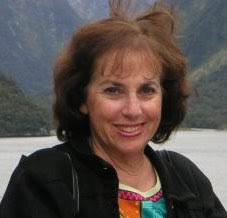
Happy New Year. It is now 2012 and each time a new year arrives, I have many scattered thoughts of my life and my daughter, some of which I’d like to share with you.
It has been almost 17 years since Marcy’s fatal car accident. She should be here, I say to myself. She should be enjoying this life here on earth with her husband and what might have been many children, a wonderful career and many friends.
Time passes so quickly. I am getting older and hopefully wiser about life and how the twists and turns, joys and heartaches are etched into your life. I have many things to be thankful for and many things I still want to do, some in memory of my daughter, others with my husband, and the rest with just myself.
I have accomplished much since my daughter died; I felt a burning need to help others and hope I am doing that and can continue to do that for many more years. I have new friends, many of whom never knew Marcy, but hear about her through me and say, “She must have been very special.” “Oh, yes,” I answer, she was. And they show their appreciation of me through giving to her foundation each year to help other young people achieve their goals.
I think about my daughter every second of every day. Only I know that (and now you). I think of what might have been and what will never be. I am disgusted how her death was such a waste of a beautiful life. I think of how different my life would have been if she had been able to live and enjoy her life. I think of her husband and how sad it is that I have no contact with him. But then I think of my three Godchildren, born through my daughter’s best friend, and I am hoping for a fabulous life for all of them. They are being brought up well, are good people and I see them doing great things. I wish them only the best.
I don’t feel as old as I am. I don’t even think of myself as getting older each year. When I look in the mirror, I don’t see an older woman. I feel like I have the energy of a woman in her forties; I am healthy; and I want to continue traveling, having friends over and enjoying many, many more years laughing with my husband. Oh, yes, the wrinkles are there, but I am not interested in trying to look younger as many do. I am satisfied with who I am.
What would I do differently, knowing all that I know now? My answer: NOTHING. Everything has a reason for happening, although I sometimes question why my daughter had to die. But I have seen so much good come out of my life since 1994 (the worst year of my life) that I have to say I’ve adapted to my new life, but never, ever forget the most beautiful experience of my life: giving birth to and bringing up my daughter. That is what gives my life meaning and always will.
Sunday, January 2, 2011


Sunday, December 26, 2010
Using Medicines To Ease Grief
There are many pros and cons about using medicine when grieving the loss of a child or any loved one. Some say they couldn’t have survived without it; others say it is not necessary, that you will eventually move on with your life and can do so without any drugs. I believe there is a case for both.
As a society we tend to think there is a chemical solution to every problem we may have and surely the death of a child is way up there on the ladder. Doctors, for whatever reason, tend to hand out prescriptions if we can convince them we are in need of such. But we must be cautious of whether we need medicine or not and ask our doctor what medicines should be taken if necessary.
One bereaved single mother I met recently, who takes medicines for health reasons and has done so her whole life, was told by a few friend and later her doctor, that an anti-depressant would help her during her grief journey. She was not convinced. She didn’t want to put anything more into her body than was necessary. She was afraid of any reactions she might have. And she was not sure medicine was the answer.
This mother was lucky. She had other friends who turned out to be a great support system for her needs. They came over and helped with preparing meals for her family, helped her with housework, even helped her when it came time to pay the bills. On some days they took her out to lunch and even got her to laugh occasionally. If appropriate, and they saw it might help, they would talk about the child and encourage the mother to do so as part of her grief work. They even suggested a grief group where she could share with others. They made sure she got enough rest, enough physical activity and ate right. Through it all, they also gave her space; time to be by herself: to cry, to journal, to do whatever she needed to deal with her pain.
“My friends saved my life by showing me they cared and wanted to help, and I’ll never forget their kindness,” the mother said. “I’m in a good place now. Time and friendships were a great healer for me.”
On the other hand, there are some people who depend on all types of medications to make their life easier. In the case of the death of a child, they believe it is the only way to survive. The severe grief reaction one may have can bring on chemical depression and can lead to all kinds of problems, even suicide.
Dr. Richard Dew, in an article he wrote, says than chemical depressions results from lowered levels of substances in the brain called neurotransmitters. It is generally believed that 10-15% of the population is genetically predisposed to chemical depression. If something happens to lower that neurotransmitter level, this is where the problems begin. Often a trial of antidepressant medication is the only way to tell if this is the case. “It will take three to four weeks to see if there is a response. I always caution my patients that antidepressants will not make you feel good. They make you feel more near whatever is normal for you. For those grieving a close loss, you won’t feel good, but you’ll now be in the same boat as others in your group, and you are more able to do your grief work and benefit from it.”
Dr. Dew cautions that medication may be a necessary aid for some, but it is only one part of the healing process. Coping skills are what will get you through this.
NOTE: If you personally have any reaction to using medicine for grief, I’d like to hear about it. Email me your comments.
As a society we tend to think there is a chemical solution to every problem we may have and surely the death of a child is way up there on the ladder. Doctors, for whatever reason, tend to hand out prescriptions if we can convince them we are in need of such. But we must be cautious of whether we need medicine or not and ask our doctor what medicines should be taken if necessary.
One bereaved single mother I met recently, who takes medicines for health reasons and has done so her whole life, was told by a few friend and later her doctor, that an anti-depressant would help her during her grief journey. She was not convinced. She didn’t want to put anything more into her body than was necessary. She was afraid of any reactions she might have. And she was not sure medicine was the answer.
This mother was lucky. She had other friends who turned out to be a great support system for her needs. They came over and helped with preparing meals for her family, helped her with housework, even helped her when it came time to pay the bills. On some days they took her out to lunch and even got her to laugh occasionally. If appropriate, and they saw it might help, they would talk about the child and encourage the mother to do so as part of her grief work. They even suggested a grief group where she could share with others. They made sure she got enough rest, enough physical activity and ate right. Through it all, they also gave her space; time to be by herself: to cry, to journal, to do whatever she needed to deal with her pain.
“My friends saved my life by showing me they cared and wanted to help, and I’ll never forget their kindness,” the mother said. “I’m in a good place now. Time and friendships were a great healer for me.”
On the other hand, there are some people who depend on all types of medications to make their life easier. In the case of the death of a child, they believe it is the only way to survive. The severe grief reaction one may have can bring on chemical depression and can lead to all kinds of problems, even suicide.
Dr. Richard Dew, in an article he wrote, says than chemical depressions results from lowered levels of substances in the brain called neurotransmitters. It is generally believed that 10-15% of the population is genetically predisposed to chemical depression. If something happens to lower that neurotransmitter level, this is where the problems begin. Often a trial of antidepressant medication is the only way to tell if this is the case. “It will take three to four weeks to see if there is a response. I always caution my patients that antidepressants will not make you feel good. They make you feel more near whatever is normal for you. For those grieving a close loss, you won’t feel good, but you’ll now be in the same boat as others in your group, and you are more able to do your grief work and benefit from it.”
Dr. Dew cautions that medication may be a necessary aid for some, but it is only one part of the healing process. Coping skills are what will get you through this.
NOTE: If you personally have any reaction to using medicine for grief, I’d like to hear about it. Email me your comments.
Sunday, December 19, 2010
The Prayer Registry
Editor’s note: I received the following information about a fairly new online website service. It is not in my new book because I didn’t know about it until now, so I thought I’d give you a little information about it in case you would like to join or get more information.
The Prayer Registry (www.sheriperl.com) is a free website service dedicated to all of the families who have lost children no matter the age.
It was started by Sheri Perl Migdol after she lost her 22 year old son Danny in 2008 to an overdose and dedicated to him. The site registers the anniversary day of the child’s death. Members of this online community, the Prayer Team, have the opportunity to honor their child’s legacy, connect with other bereaved parents, and participate in world-wide group prayer for every registered loved one on the anniversary day of their passing, according to Sheri.
“There is no charge for this service,” said Sheri. “It is my sincere hope that every bereaved parent who registers a child will join the Prayer Team and be a source of prayer for all of the children on the other side.”
Sheri needs only the child’s full name along with the death date. The child’s name will be published on the Prayer Registry calendar and she will upload comments, biographies or any other information you want to share about your child with others. “Once a member, you will receive reminders one week and one day before the anniversary day of one of our kids.”
She encourages bereaved parents to email any questions, concerns or feelings that you would like to share. “My door is always open. I hope this site provides some small measure of balm for the wounds of loss. From one bereaved parent to another, I welcome you to my site and offer my support.”
“This is one club that none of us would join by choice, but since we find ourselves in this unthinkable place, we stand stronger when we stand side by side,” she added.
The Prayer Registry (www.sheriperl.com) is a free website service dedicated to all of the families who have lost children no matter the age.
It was started by Sheri Perl Migdol after she lost her 22 year old son Danny in 2008 to an overdose and dedicated to him. The site registers the anniversary day of the child’s death. Members of this online community, the Prayer Team, have the opportunity to honor their child’s legacy, connect with other bereaved parents, and participate in world-wide group prayer for every registered loved one on the anniversary day of their passing, according to Sheri.
“There is no charge for this service,” said Sheri. “It is my sincere hope that every bereaved parent who registers a child will join the Prayer Team and be a source of prayer for all of the children on the other side.”
Sheri needs only the child’s full name along with the death date. The child’s name will be published on the Prayer Registry calendar and she will upload comments, biographies or any other information you want to share about your child with others. “Once a member, you will receive reminders one week and one day before the anniversary day of one of our kids.”
She encourages bereaved parents to email any questions, concerns or feelings that you would like to share. “My door is always open. I hope this site provides some small measure of balm for the wounds of loss. From one bereaved parent to another, I welcome you to my site and offer my support.”
“This is one club that none of us would join by choice, but since we find ourselves in this unthinkable place, we stand stronger when we stand side by side,” she added.
Sunday, December 12, 2010
Anniversary remembrances
The first anniversary of your child’s death is very difficult as is many other “firsts.” Above everything else, parents don’t want their child to be forgotten. Many make the effort to make sure this doesn’t happen, particularly on the first birthday after the death.
Here is one idea from a bereaved parent who felt a great need to do something special on her son Scott’s birthday, 8 months after he died. She had a birthday party for him recording the entire event so she would have something to look back on and always remember. She invited both Scott’s close friends and a few of her own who had known Scott his whole life. She asked each person to bring a remembrance story about Scott. It could be a serious or funny story or combination of both.
In the weeks proceeding the party, she went through pictures she had, picked about 50 of them and prepared a music/slide presentation to show guests. She also laid out many scrapbooks she had and displayed items from Scott’s life in the main room: his awards, his football jersey, his prom picture, etc. Friends appreciated seeing items that remind them of times spent together.
This mom also picked out one special picture and used it to make t-shirts for all the guests. When they arrived, she handed them out and asked the guest to put the shirt on for the celebration.
She cooked Scott’s favorite meal: hamburgers and onion rings and made a black forest birthday cake, another favorite, with ice-cream. When everyone was done eating, remembrance stories were told, and then they were handed a small piece of paper to write a short message to Scott and attach it to a helium balloon. In the back yard, a poem the mom wrote was read and a balloon release sent all the messages high in the sky.
She ended the party with a short speech about how she appreciated everyone coming and that she hoped this would be the start of something nice each one of them could do every year on Scott’s birthday to help others and remember, with love, their dear friend. Everyone was encouraged to visit a children’s hospital with little gifts of stuffed animals, making a donation to an organization in Scott’s name, start a scholarship at the school he went to, donate blood to help others, simply light a candle on that special day or any other idea of their choice.
This was her way of celebrating Scott’s life and encouraging his friends to find some good in this horrible tragedy. She could only hope her words found a place in each of their hearts.
As for myself, I always go to the cemetery on that day, bring flowers and talk to my daughter, telling her how much she is missed by both myself, her husband and her friends. One mother I know holds and annual golf tournament since her child was into that sport. Another is involved in MADD and speaks to high school students about drinking and driving, and still another started a memorial page online where others can go and leave messages and remembrances. Friends may want to get together and plant a tree in his or her name and perhaps even place a plaque in the area. There are many things one can do.
Keep everything sent or given to you after your child died, so you can look back with loving thoughts. Best of all, reach out to others who are bereaved and you will find it will also help you in your grief journey.
Here is one idea from a bereaved parent who felt a great need to do something special on her son Scott’s birthday, 8 months after he died. She had a birthday party for him recording the entire event so she would have something to look back on and always remember. She invited both Scott’s close friends and a few of her own who had known Scott his whole life. She asked each person to bring a remembrance story about Scott. It could be a serious or funny story or combination of both.
In the weeks proceeding the party, she went through pictures she had, picked about 50 of them and prepared a music/slide presentation to show guests. She also laid out many scrapbooks she had and displayed items from Scott’s life in the main room: his awards, his football jersey, his prom picture, etc. Friends appreciated seeing items that remind them of times spent together.
This mom also picked out one special picture and used it to make t-shirts for all the guests. When they arrived, she handed them out and asked the guest to put the shirt on for the celebration.
She cooked Scott’s favorite meal: hamburgers and onion rings and made a black forest birthday cake, another favorite, with ice-cream. When everyone was done eating, remembrance stories were told, and then they were handed a small piece of paper to write a short message to Scott and attach it to a helium balloon. In the back yard, a poem the mom wrote was read and a balloon release sent all the messages high in the sky.
She ended the party with a short speech about how she appreciated everyone coming and that she hoped this would be the start of something nice each one of them could do every year on Scott’s birthday to help others and remember, with love, their dear friend. Everyone was encouraged to visit a children’s hospital with little gifts of stuffed animals, making a donation to an organization in Scott’s name, start a scholarship at the school he went to, donate blood to help others, simply light a candle on that special day or any other idea of their choice.
This was her way of celebrating Scott’s life and encouraging his friends to find some good in this horrible tragedy. She could only hope her words found a place in each of their hearts.
As for myself, I always go to the cemetery on that day, bring flowers and talk to my daughter, telling her how much she is missed by both myself, her husband and her friends. One mother I know holds and annual golf tournament since her child was into that sport. Another is involved in MADD and speaks to high school students about drinking and driving, and still another started a memorial page online where others can go and leave messages and remembrances. Friends may want to get together and plant a tree in his or her name and perhaps even place a plaque in the area. There are many things one can do.
Keep everything sent or given to you after your child died, so you can look back with loving thoughts. Best of all, reach out to others who are bereaved and you will find it will also help you in your grief journey.
Sunday, December 5, 2010
Video, Interview and Candlelighting
YOU TUBE
My first You-Tube video is now online about my latest book, “Creating a New Normal…After the Death of a Child,” and I can proudly say I did it myself, with my husband doing the production part (placing it on YouTube with music). The ideas were mine, the photos taken by me and the organization done by myself. It took many hours of planning, visualizing and getting only bereaved parents to participate in the photos. I am proud of the finished product and invite you to watch it and even pass on the link for others to see. The link information is on the right side of this page. Scroll all the way down to where it says You Tube Video and click. When it comes up, click on the arrow box in the right hand bottom corner to make the video full screen and watch it. It's around 4 minutes long. Hope you like it. Let me know.
OPEN TO HOPE INTERVIEW
Open to Hope did a 20 minute interview of me for their show about my new book, but specifically how married couples, who have lost a child, can save their marriage. It will air all week long from Dec. 2-9 from their main site www.opentohope.com and then be archived for further viewing. I enjoy my conversations with Gloria and Heidi Horsley. Gloria is a bereaved mother and Heidi a bereaved sibling. Together they started the Open To Hope Foundation and their web site in 2007. They now get over a million hits a month. Whether you have lost a child, spouse, grandchild, sibling or even a pet, this site tries to reach everyone with a loss. Check it out.
WORLDWIDE CANDLE LIGHTING
Sunday, December 12 is the 14th annual Worldwide Candle Lighting. At 7 p.m. local time candles will shine for one hour (creating a virtual wave of light around the globe) in memory of all our children. If you contact your local Compassionate Friends chapter, you can find out if services will be held in your area. You can also look on the TCF website: http://www.compassionatefriends.org/ for a listing of services, which are open to the public. Also houses of worship, hospitals and funeral homes in some areas hold remembrance services. TCF also has a Remembrance Book in which you can post a note to your loved one on December 12 only, but look at all year long. In addition, you may want to share the time with friends and relatives or just spend the time alone in quiet solitude. The choice is yours, but don't miss this opportunity to remember your child and join hundreds of thousands around the world who are doing the same.
My first You-Tube video is now online about my latest book, “Creating a New Normal…After the Death of a Child,” and I can proudly say I did it myself, with my husband doing the production part (placing it on YouTube with music). The ideas were mine, the photos taken by me and the organization done by myself. It took many hours of planning, visualizing and getting only bereaved parents to participate in the photos. I am proud of the finished product and invite you to watch it and even pass on the link for others to see. The link information is on the right side of this page. Scroll all the way down to where it says You Tube Video and click. When it comes up, click on the arrow box in the right hand bottom corner to make the video full screen and watch it. It's around 4 minutes long. Hope you like it. Let me know.
OPEN TO HOPE INTERVIEW
Open to Hope did a 20 minute interview of me for their show about my new book, but specifically how married couples, who have lost a child, can save their marriage. It will air all week long from Dec. 2-9 from their main site www.opentohope.com and then be archived for further viewing. I enjoy my conversations with Gloria and Heidi Horsley. Gloria is a bereaved mother and Heidi a bereaved sibling. Together they started the Open To Hope Foundation and their web site in 2007. They now get over a million hits a month. Whether you have lost a child, spouse, grandchild, sibling or even a pet, this site tries to reach everyone with a loss. Check it out.
WORLDWIDE CANDLE LIGHTING
Sunday, December 12 is the 14th annual Worldwide Candle Lighting. At 7 p.m. local time candles will shine for one hour (creating a virtual wave of light around the globe) in memory of all our children. If you contact your local Compassionate Friends chapter, you can find out if services will be held in your area. You can also look on the TCF website: http://www.compassionatefriends.org/ for a listing of services, which are open to the public. Also houses of worship, hospitals and funeral homes in some areas hold remembrance services. TCF also has a Remembrance Book in which you can post a note to your loved one on December 12 only, but look at all year long. In addition, you may want to share the time with friends and relatives or just spend the time alone in quiet solitude. The choice is yours, but don't miss this opportunity to remember your child and join hundreds of thousands around the world who are doing the same.
Sunday, November 28, 2010
A Holiday Message
Editor's note: SIDS Foundation sent this beautiful note to eveyone this week at the start of the holiday season. I found its message to be simple but profound and so I wanted to share it with you as you think about your child and what this season may mean to you.
With Thanksgiving this week kicking-off of the holiday season, we thought we would take this opportunity to share a bit of information on handling the holidays.
First off, acknowledging and recognizing that that every holiday season will bring up different emotions and certainly, if this is your first following the loss of your child, your experience will be quite different than it had been in the past. Holidays, which had heralded joy and celebrations, may now be accompanied by feelings of loneliness, sadness, anger, and anxiety for many. Through the darkened days of this season, it is vital that families allow themselves to also see the light.
Light can be a symbol of life, hope, faith, as well as enjoyment. Christmas, Kwanzaa and Chanukah are all upcoming holidays that celebrate using light. As part of the “journey of healing”, try to use the light to help lead you through this most difficult season. Look again at your support systems- family, friends and faith and consider “rekindling” relationships that may have “burned low.” Share with family and friends what helps and what hurts. Utilize your support system to keep your light shining bright. You may want to pick and choose which events to attend. Acknowledge and accept the feelings you are having. Don’t let the expectations of others prevent you from meeting your own needs. Set some goals for yourself and plan ways to help you handle any potential uncomfortable situations.
Another very valuable part of the holiday season is the act of giving. To be able to reach out and help someone else in need can be a very rewarding, empowering, and inspiring experience. One of the most important people to give to is you. During this season, be sure to nurture yourself physically, emotionally and spiritually. After a loss, many people neglect themselves and often feel guilty taking care of their needs. When done in memory of your child, the act of giving, including to yourself, can be an even more powerful experience than ever before.
May the bright memories of your child light your way through the holiday season. We wish you peace with your family and friends.
With Thanksgiving this week kicking-off of the holiday season, we thought we would take this opportunity to share a bit of information on handling the holidays.
First off, acknowledging and recognizing that that every holiday season will bring up different emotions and certainly, if this is your first following the loss of your child, your experience will be quite different than it had been in the past. Holidays, which had heralded joy and celebrations, may now be accompanied by feelings of loneliness, sadness, anger, and anxiety for many. Through the darkened days of this season, it is vital that families allow themselves to also see the light.
Light can be a symbol of life, hope, faith, as well as enjoyment. Christmas, Kwanzaa and Chanukah are all upcoming holidays that celebrate using light. As part of the “journey of healing”, try to use the light to help lead you through this most difficult season. Look again at your support systems- family, friends and faith and consider “rekindling” relationships that may have “burned low.” Share with family and friends what helps and what hurts. Utilize your support system to keep your light shining bright. You may want to pick and choose which events to attend. Acknowledge and accept the feelings you are having. Don’t let the expectations of others prevent you from meeting your own needs. Set some goals for yourself and plan ways to help you handle any potential uncomfortable situations.
Another very valuable part of the holiday season is the act of giving. To be able to reach out and help someone else in need can be a very rewarding, empowering, and inspiring experience. One of the most important people to give to is you. During this season, be sure to nurture yourself physically, emotionally and spiritually. After a loss, many people neglect themselves and often feel guilty taking care of their needs. When done in memory of your child, the act of giving, including to yourself, can be an even more powerful experience than ever before.
May the bright memories of your child light your way through the holiday season. We wish you peace with your family and friends.
Sunday, November 21, 2010
Writing Obit for Loved One
Writing an obituary for a loved one is not an easy task but an important one if you are up to doing it. You could leave it up to the newspaper staff to do and provide the information or you can write an expression of love yourself and send it in by email to be printed.
The main reason to write your own is to make sure the information gets printed correctly. I can tell you from experience that when my daughter Marcy died, I did not write the obit and wrongly assumed it would be okay to let someone else do it. In three different papers, her name was spelled three different ways: Marci, Marcie and the correct way, Marcy. I was furious that others have such disregard for making sure a name is correct. As a journalism teacher, I remember it was the first lesson I taught my students: name accuracy. And I used the example of the simple last name of Smith, which can be spelled Smithe, Smythe, Smyth or Smith.
When Marcy’s father, my ex-husband, died earlier this year, I was determined not to let that happen again and so I wrote his obituary myself, including Marcy’s name in it as having pre-deceased him. It was printed as written, and I was happy with the results.
Another reason to do it yourself is to make sure it gets to where you want it to get, that is, you may want to send it to more than one publication and usually a funeral director will not want to bother to do more than one.
You may also want it printed immediately, depending on when the service is being held, so that others can know and attend if they so desire.
There are even some people now who are writing their own obituaries and planning the whole funeral service, saying what music they want played, what poem or song they want sung, and what instructions they want followed. Although this may sound morbid, perhaps it is not a bad idea to relieve the loved one of the burden. (I have already decided what I want my funeral stone to say for my husband and me and have purchased a double funeral plot. It is something everyone should think about.)
Obituaries should contain the following basic information: name, age, date of death, when and where funeral services will be held, and surviving family members (and deceased as in the case of Marcy). Usually, the cause of death is not listed. You might want to add the school from where the person graduated, important organizations they belonged to, honors won and phrases such as “a loving father, grandfather or husband” or some personality trait he/she was known for. A final comment is usually directed at where flowers or contributions in the person’s memory can be made.
Many like to send photos along with the article written. This can also be sent by email. You don’t want to take the chance of calling in all the information, and sending it all snail mail takes too long. Too many mistakes can be made, and once it is printed, it is too late to correct.
There is usually a cost involved to get a nice obituary in a local newspaper, and it ranges anywhere from free to $200, as I discovered recently. Call the newspaper for the email to send the information or if you have a good funeral director, they will email it immediately to where it needs to go.
Although not a pleasant thing to have to do, it will be the last thing read for some friends of the deceased. You want it to be a tribute to them, done accurately and properly.
The main reason to write your own is to make sure the information gets printed correctly. I can tell you from experience that when my daughter Marcy died, I did not write the obit and wrongly assumed it would be okay to let someone else do it. In three different papers, her name was spelled three different ways: Marci, Marcie and the correct way, Marcy. I was furious that others have such disregard for making sure a name is correct. As a journalism teacher, I remember it was the first lesson I taught my students: name accuracy. And I used the example of the simple last name of Smith, which can be spelled Smithe, Smythe, Smyth or Smith.
When Marcy’s father, my ex-husband, died earlier this year, I was determined not to let that happen again and so I wrote his obituary myself, including Marcy’s name in it as having pre-deceased him. It was printed as written, and I was happy with the results.
Another reason to do it yourself is to make sure it gets to where you want it to get, that is, you may want to send it to more than one publication and usually a funeral director will not want to bother to do more than one.
You may also want it printed immediately, depending on when the service is being held, so that others can know and attend if they so desire.
There are even some people now who are writing their own obituaries and planning the whole funeral service, saying what music they want played, what poem or song they want sung, and what instructions they want followed. Although this may sound morbid, perhaps it is not a bad idea to relieve the loved one of the burden. (I have already decided what I want my funeral stone to say for my husband and me and have purchased a double funeral plot. It is something everyone should think about.)
Obituaries should contain the following basic information: name, age, date of death, when and where funeral services will be held, and surviving family members (and deceased as in the case of Marcy). Usually, the cause of death is not listed. You might want to add the school from where the person graduated, important organizations they belonged to, honors won and phrases such as “a loving father, grandfather or husband” or some personality trait he/she was known for. A final comment is usually directed at where flowers or contributions in the person’s memory can be made.
Many like to send photos along with the article written. This can also be sent by email. You don’t want to take the chance of calling in all the information, and sending it all snail mail takes too long. Too many mistakes can be made, and once it is printed, it is too late to correct.
There is usually a cost involved to get a nice obituary in a local newspaper, and it ranges anywhere from free to $200, as I discovered recently. Call the newspaper for the email to send the information or if you have a good funeral director, they will email it immediately to where it needs to go.
Although not a pleasant thing to have to do, it will be the last thing read for some friends of the deceased. You want it to be a tribute to them, done accurately and properly.
Subscribe to:
Posts (Atom)